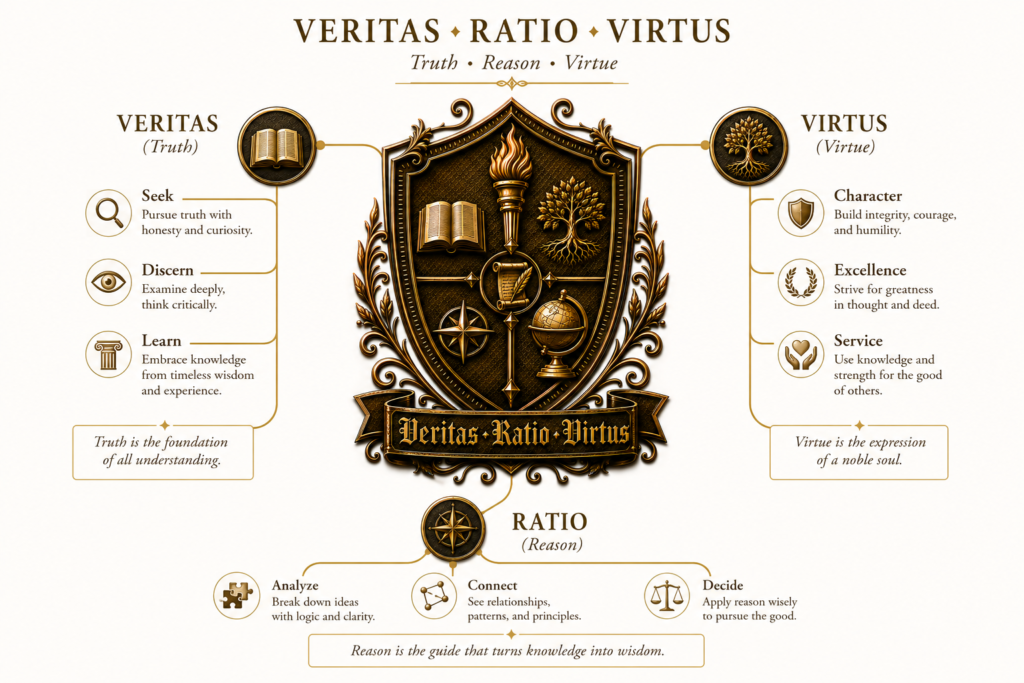

Veritas, Ratio, Virtus—Truth, Reason, and Virtue—form a timeless triad that has guided scholars, philosophers, and institutions of learning for centuries. Together, these ideals represent the pursuit of knowledge, the disciplined use of intellect, and the cultivation of moral character. They are not merely abstract concepts but foundational principles that shape both personal growth and the advancement of society.
Veritas (Truth) stands as the first and highest aim of all genuine inquiry. The search for truth drives education, scholarship, and philosophical reflection. It calls individuals to seek understanding with honesty, humility, and intellectual integrity. Truth is not simply the accumulation of facts; it is the continual pursuit of what is real, just, and meaningful. Without truth as a guiding principle, knowledge risks becoming distorted by prejudice, ignorance, or deception.
Ratio (Reason) is the faculty through which truth is discovered and understood. Through logic, critical thinking, and careful analysis, reason enables us to distinguish sound judgment from error. It encourages thoughtful examination rather than blind acceptance and promotes dialogue, inquiry, and intellectual rigor. In the academic world, reason serves as the bridge between information and wisdom, transforming observations into understanding and ideas into knowledge.
Virtus (Virtue) gives moral purpose to both truth and reason. Knowledge alone is insufficient if it is not accompanied by character. Virtue embodies qualities such as integrity, courage, justice, humility, and compassion. It directs intellectual achievements toward the common good and reminds us that education should not only develop the mind but also refine the heart. Virtue ensures that wisdom is applied ethically and responsibly.
These three ideals are deeply interconnected. Truth provides the goal, reason offers the method, and virtue guides the application. Truth without reason may become dogma; reason without truth loses direction; and both truth and reason without virtue risk serving selfish or harmful ends. Together, they create a harmonious framework for intellectual and moral excellence.
In an age of rapid change and abundant information, the principles of Veritas, Ratio, Virtus remain profoundly relevant. They inspire a lifelong commitment to learning, thoughtful reflection, and ethical action. As enduring pillars of education and human flourishing, they remind us that the highest purpose of knowledge is not merely to know more, but to understand more deeply, act more wisely, and live more nobly.